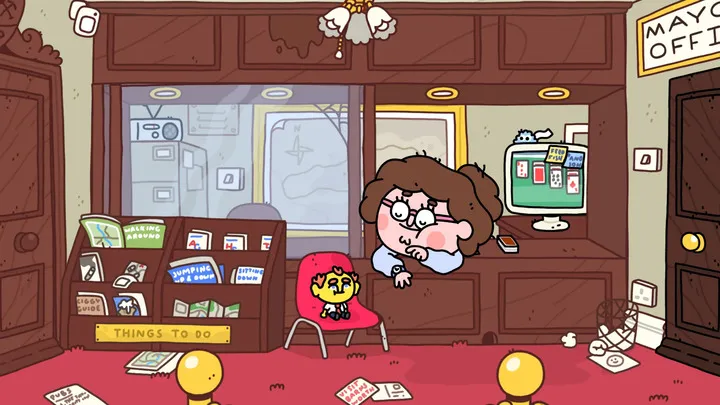

In Thank Goodness You're Here!, success doesn’t come from reflexes or combat—it comes from understanding something far stranger: comedic logic. The game is built around absurd cause-and-effect chains, where every interaction can trigger unexpected outcomes. Many players get stuck not because puzzles are difficult, but because they try to solve them logically rather than comedically.
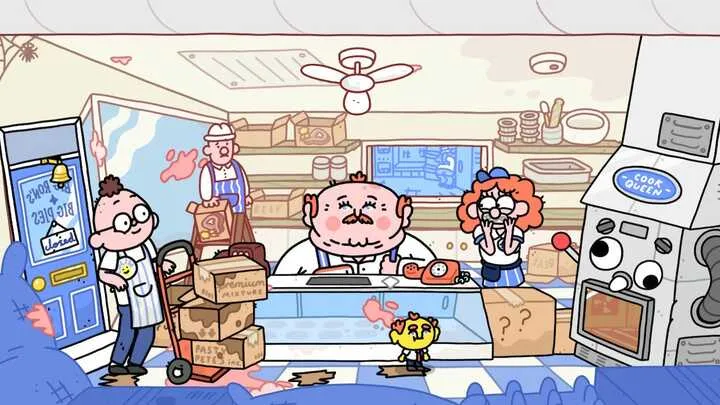
This guide focuses on a specific “tips & guides” topic: how to master interaction chains, timing, and environmental logic. Instead of treating puzzles as isolated problems, you’ll learn how the game structures its humor into solvable systems. From early exploration to late-game chaos, this article teaches you how to think like the game—so every bizarre situation becomes readable, predictable, and ultimately solvable.
Understanding Comedic Logic vs Traditional Puzzle Logic
Why Normal Thinking Fails
Most puzzle games reward consistency and realism. This game does the opposite—it rewards absurdity with internal rules.
Players often fail because they assume:
- Objects behave realistically
- NPCs react predictably
- Actions have direct outcomes
In reality, the game operates on comedic escalation.
The Rule of Absurd Cause-and-Effect
Core principle:
- Small action → exaggerated reaction → chain reaction
Examples of logic patterns:
- A simple tap leads to a full environmental collapse
- NPC complaints trigger multi-step sequences
- Objects behave differently depending on context
To succeed, stop asking “Does this make sense?” and start asking “Would this be funny?”
Early Exploration: Learning to Interact With Everything
Why Interaction Is the Core Mechanic
The game teaches you early that everything is interactive—and more importantly, everything matters.
Players who only interact with obvious objects miss key triggers.
Exploration Strategy
Always:
- Tap every object at least once
- Revisit objects after changes
- Observe NPC reactions closely
Exploration Checklist
- Walls, doors, props
- NPCs (multiple times)
- Moving objects
The game rewards curiosity more than precision.
Recognizing Interaction Chains
What Are Interaction Chains?
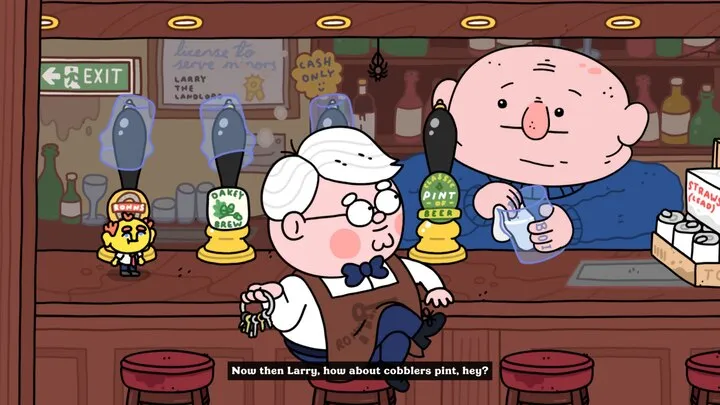
An interaction chain is a sequence where one action triggers another, often across multiple steps.
Example structure:
- Trigger object
- NPC reacts
- Environment changes
- New interaction becomes available
Identifying Chains Early
Look for:
- NPCs repeating dialogue
- Objects that seem inactive at first
- Environmental hints (movement, sound)
Chain Recognition Tips
- If nothing happens immediately, something did happen elsewhere
- Always scan the environment after each action
- Think in sequences, not single actions
Mastering chains is essential for progression.
Timing-Based Interactions and Reaction Windows
Why Timing Matters
Some puzzles require precise timing rather than just correct actions. These are often hidden beneath comedic animations.
How to Identify Timing Sections
Clues include:
- Repeating animations
- Moving objects or NPCs
- Rhythmic environmental changes
Timing Strategy
To succeed:
- Watch patterns before acting
- Do not rush inputs
- Synchronize actions with movement
Timing Checklist
- Observe → wait → act
- Repeat patterns before attempting
- Stay consistent
Patience is key in timing-based puzzles.
NPC Behavior Patterns and Dialogue Clues
NPCs as Puzzle Indicators
NPCs are not just characters—they are living hints. Their dialogue often reflects puzzle states.
Reading NPC Behavior
Pay attention to:
- Repeated lines
- Changes in tone or wording
- Physical movement
Dialogue-Based Strategy
- Talk to NPCs multiple times
- Return after triggering events
- Interpret exaggeration as hints
NPCs guide you—but only if you listen carefully.
Environmental Changes as Progress Signals
Subtle Indicators of Progress
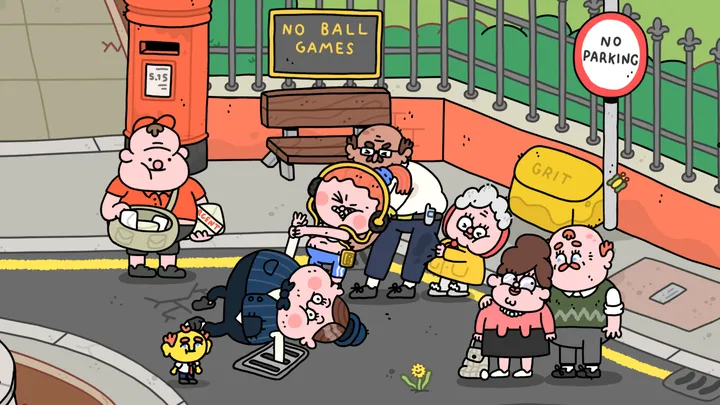
The game rarely tells you when you’re on the right track. Instead, it uses environmental changes.
Examples:
- Slight movement in objects
- New sounds or effects
- Visual changes in background elements
Tracking Changes
After every action:
- Pause and observe
- Look around the entire area
- Check previously visited spots
Progress Recognition Checklist
- Something changed, even if small
- New interaction opportunities exist
- The puzzle is evolving
Awareness turns confusion into clarity.
Midgame Complexity: Managing Multiple Chains
Overlapping Puzzle Systems
Midgame introduces multiple chains happening at once. This can feel chaotic.
How to Stay Organized
Break puzzles into parts:
- Identify active chains
- Focus on one at a time
- Track progress mentally
Multi-Chain Strategy
- Do not panic
- Solve one sequence fully before switching
- Revisit earlier triggers
Organization prevents overwhelm.
Advanced Interaction Techniques
Combining Actions
Later puzzles require combining multiple actions in sequence or simultaneously.
Advanced Patterns
- Trigger A → move to B → return to A
- Activate multiple objects before resolution
- Use NPC movement as part of the puzzle
Advanced Checklist
- Think beyond immediate area
- Combine previously learned mechanics
- Experiment with order of actions
The game rewards creative thinking.
Late-Game Chaos: Staying Calm in Absurdity
When Everything Becomes Unpredictable
Late-game sections increase chaos intentionally. Multiple events happen rapidly.
Maintaining Control
To stay effective:
- Slow down your thinking
- Focus on one change at a time
- Ignore distractions
Chaos Management Strategy
- Identify key interactions
- Block out visual noise
- Stick to known patterns
Calm observation beats frantic input.
Achieving Puzzle Flow and Intuition
Entering the “Comedic Flow State”
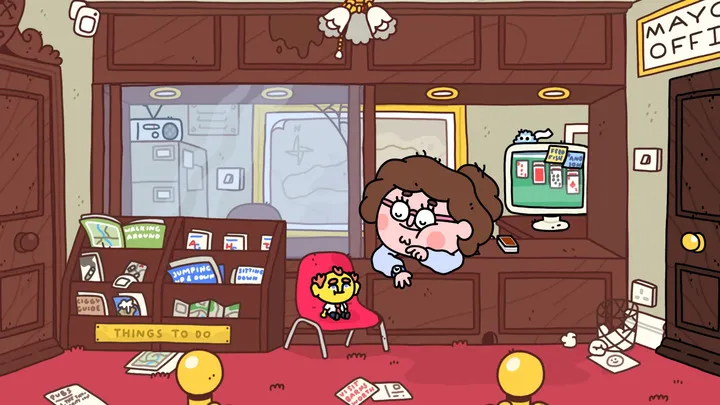
At mastery level, puzzles feel intuitive. You begin predicting outcomes based on logic patterns.
Building Intuition
- Recognize recurring joke structures
- Anticipate chain reactions
- Trust your instincts
Flow State Checklist
- Minimal hesitation
- Clear understanding of interactions
- Smooth progression through puzzles
This is where the game becomes most enjoyable.
Conclusion
Thank Goodness You’re Here! is a masterclass in turning humor into gameplay. Its puzzles are not random—they follow a consistent internal logic built on exaggeration, timing, and interaction chains. Players who try to solve it traditionally will struggle, but those who embrace its comedic structure will find a surprisingly coherent system beneath the chaos.
By learning to observe carefully, track changes, interpret NPC behavior, and think in sequences, you can transform confusion into control. The key is not to fight the absurdity—but to understand it. Once you do, every bizarre moment becomes a solvable puzzle, and every laugh becomes a clue.